

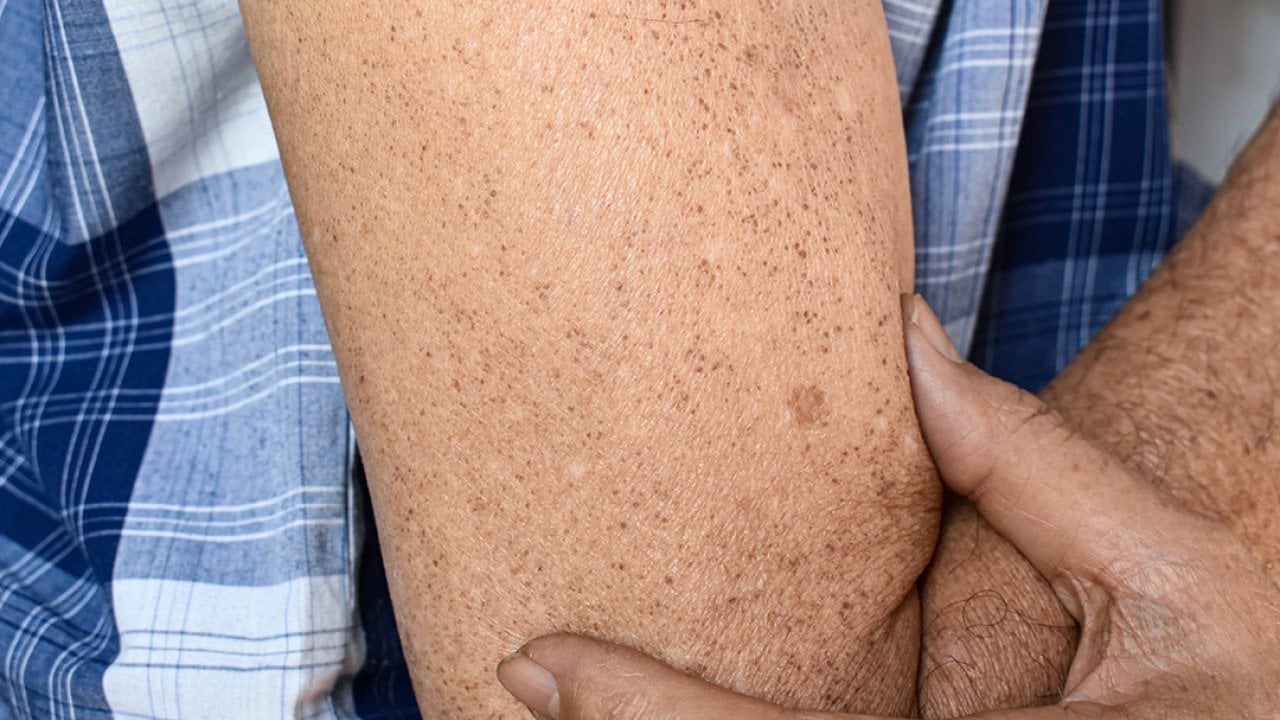
Zay Nyi Nyi // Shutterstock
Sunspots vs. freckles: How to tell them apart
Those little brown marks on the skin confuse many people. Both involve excess pigment in the skin, but they arise from different causes and behave differently. Freckles often bring back memories of summer days as a kid, while sunspots can signal that the skin has been exposed to too much sun over the years. Knowing which is which helps people take better care of their skin and recognize when a spot warrants medical attention.
Doctronic explains how to distinguish sunspots from freckles, why they form, when to seek dermatologic care, and which prevention and treatment options help keep skin healthy over time.
Key Takeaways
- Freckles are genetic and appear in childhood, while sunspots develop from years of UV exposure and typically show up after age 30.
- Freckles are usually smaller than 5 millimeters and fade in winter, but sunspots stay visible year-round and can grow larger over time.
- Both conditions are usually harmless, but any spot with irregular borders, multiple colors, or rapid changes needs professional evaluation.
- The ABCDE method helps identify potentially dangerous skin changes that require a dermatologist’s attention.
- Prevention through daily SPF use and protective clothing reduces both conditions and lowers skin cancer risk.
Understanding Pigmentation
Genetics vs. UV Exposure
Freckles are mostly about genes. People inherit a tendency to develop them, especially those with fair skin and red or blonde hair. The MC1R gene plays a significant role. When sunlight hits the skin, melanocytes in people with this inherited skin trait produce melanin unevenly, creating small clusters of color.
Sunspots work differently. They form when cumulative sun exposure causes melanocytes to multiply and clump together over time. The skin essentially keeps a record of every sunburn and extended UV exposure, and eventually that damage becomes visible as concentrated pigment deposits.
Typical Age of Onset
Freckles usually show up between the ages of 2 and 4. They become more noticeable during childhood and may fade somewhat in adulthood. Many people notice their freckles are less visible as they age.
Sunspots can begin to appear as early as the late 20s or 30s, especially in people with high UV exposure, and become more common with each passing decade. Once they form, they tend to stay and may even darken or multiply without proper sun protection.
Visual Characteristics and Physical Differences
Color, Shape, and Size
Freckles tend to be light tan to light brown with clear, defined edges and are usually less than 5 millimeters in diameter. Each freckle is roughly the same color throughout. Sunspots are darker, ranging from tan to dark brown, and can measure up to 1.5 centimeters, making them noticeably larger than freckles.
Common Locations
Both appear on sun-exposed areas, such as the face, shoulders, arms, and upper back. Freckles scatter across these areas in a random pattern, while sunspots tend to appear on areas that get the most consistent exposure: the backs of hands, forearms, and face. People who have spent years driving may notice more sunspots on their left arm and hand.
Seasonal Changes
This is one of the easiest ways to tell them apart. Freckles darken in summer when UV exposure increases and fade significantly during the winter months. Sunspots stay put regardless of season. They may darken slightly with sun exposure, but they do not fade in winter.
When to Consult a Dermatologist
The ABCDE Method
Most freckles and sunspots are harmless, but the ABCDE method helps evaluate suspicious spots: asymmetry, where one half looks different from the other; border irregularity with ragged or uneven edges; color variation with multiple shades within one spot; diameter larger than a pencil eraser; and evolving appearance, with any change over time. Recognizing these melanoma warning signs early can significantly improve outcomes.
Identifying Atypical Spots
Lentigo maligna melanoma is a type of melanoma that can look like a sun spot at first, typically appearing as a flat, brown patch that slowly grows and develops uneven coloring. Atypical moles have features between normal moles and melanoma and may be larger, have uneven coloring, or show irregular borders. People with many atypical moles have a higher risk of melanoma and should have regular skin checks. Understanding what to look for among signs of melanoma helps people make informed decisions about when to seek evaluation.
Treatment Options for Reducing Hyperpigmentation
Topical Solutions
Retinoids speed up skin cell turnover, gradually fading dark spots over several months. Vitamin C serums block melanin production and provide antioxidant protection. Concentrations between 10% and 20% of L-ascorbic acid produce the best results. Other helpful ingredients include niacinamide, azelaic acid, kojic acid, and alpha arbutin. Finding the right dark-spot-correcting ingredients depends on individual skin type and the severity of discoloration.
Professional Procedures
Chemical peels remove the top layers of skin where pigment concentrates; light peels require multiple sessions, while deeper peels produce more dramatic results with a longer recovery. Laser treatments target pigment directly, and IPL works well for sunspots over larger areas. Most people need multiple sessions spaced several weeks apart for optimal results.
Preventive Measures for Long-Term Skin Health
Sunscreen and Physical Protection
Daily broad-spectrum SPF 30 or higher blocks both UVA and UVB rays, with UVA rays penetrating deeper and contributing significantly to pigmentation changes. Apply sunscreen every morning, even on cloudy days, and reapply every two hours when outdoors.
Physical barriers provide reliable protection: wide-brimmed hats shade the face and neck, UPF-rated clothing blocks UV rays better than regular fabric, and sunglasses protect the delicate skin around the eyes. Seeking shade during peak sun hours between 10 a.m. and 4 p.m. significantly reduces exposure.
Frequently Asked Questions
Can freckles turn into sunspots?
Freckles themselves do not transform into sunspots. They are different conditions with different causes. A person can have both freckles and sunspots in the same areas of skin as they age.
Do sunspots ever go away on their own?
Sunspots typically remain permanent without treatment. Unlike freckles, they do not fade seasonally or with reduced sun exposure. Treatment is required to reduce their appearance.
Are freckles a sign of skin damage?
Freckles indicate a genetic tendency toward increased pigment response to sunlight rather than permanent skin damage. People with freckles should be extra careful about sun protection since their skin type burns easily.
How can I prevent new spots from forming?
Consistent sunscreen use, protective clothing, and avoiding peak sun hours prevent most new spots. Starting these habits early provides the greatest benefit.
The Bottom Line
Telling sunspots and freckles apart comes down to understanding their origins, appearance, and behavior over time. Both are typically harmless, but staying alert to changes in any skin spot helps catch problems early.
This story was produced by Doctronic and reviewed and distributed by Stacker.

