How Regenerative Therapy May Support Brain Cell Communication in Parkinson’s Disease
Saint Petersburg, United States – July 7, 2026 / Stemedix /
Saint Petersburg, Florida, July 7, 2026 – Stemedix has published a new educational article examining how multiple neurotransmitters contribute to Parkinson’s disease and the wide range of symptoms experienced by patients. The release highlights current scientific findings that show the condition involves more than dopamine loss alone and may affect several communication systems throughout the brain.
The article, titled “Beyond Dopamine: Understanding the Complex Role of Neurotransmitters in Parkinson’s Disease,” reviews research related to dopamine, serotonin, norepinephrine, acetylcholine, glutamate, and GABA, along with their connection to both motor and non-motor symptoms linked to the condition.
The educational resource comes at a time when researchers continue to study how Parkinson’s disease affects neurological pathways tied to movement, mood, sleep, memory, pain perception, and cognitive function.
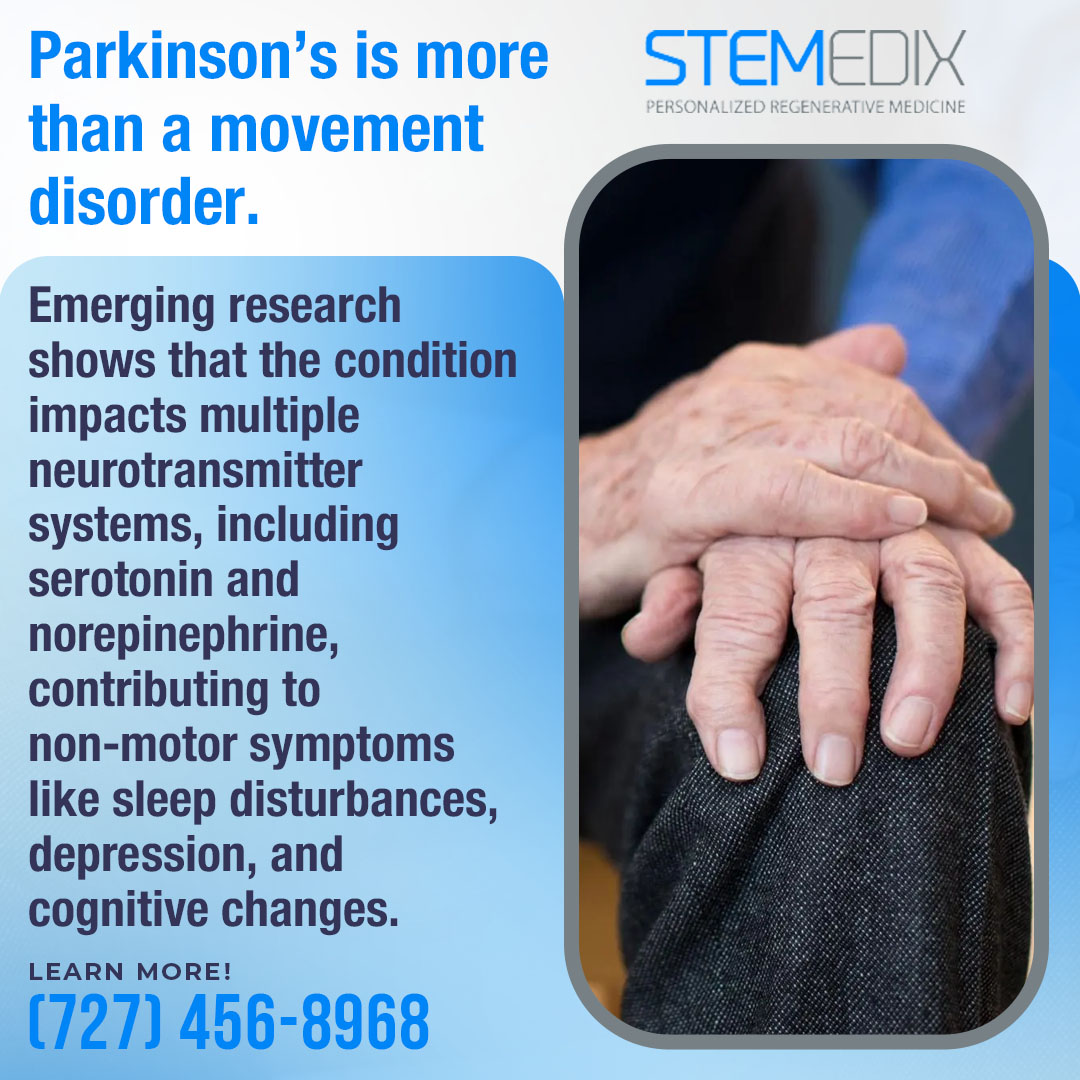
Parkinson’s Disease Symptoms Extend Beyond Tremors and Stiffness
For many years, treatment discussions surrounding Parkinson’s disease symptoms focused primarily on tremors, rigidity, and slowed movement caused by dopamine-producing cell loss in the brain. More recent research, however, points to a wider neurological process involving multiple communication pathways.
Serotonin changes may contribute to depression and sleep-related issues, while norepinephrine dysfunction has been linked to chronic pain, blood pressure irregularities, and mood changes. Acetylcholine imbalance may affect memory and concentration, while glutamate and GABA disruptions may alter movement, anxiety levels, and neurological signaling.
Clinical studies referenced in the report also indicate that some non-motor symptoms may appear years before movement-related changes become noticeable.
Researchers Continue Exploring Non-Motor Effects
Medical researchers are increasingly studying how non-motor complications affect quality of life in people living with Parkinson’s disease. Sleep disorders, psychiatric symptoms, fatigue, and cognitive difficulties are now recognized as common parts of the condition rather than secondary concerns.
“Research continues to show that Parkinson’s disease affects several neurological systems throughout the brain,” said Fred Palmer, CEO of Stemedix. “Many individuals experience symptoms that extend beyond movement difficulties, which is why broader education around the condition remains important for patients, caregivers, and healthcare professionals.”
Regenerative Therapy for Parkinson’s Disease Remains Under Investigation
The report also reviews scientific interest in regenerative therapy for Parkinson’s disease and how researchers are evaluating therapies that may target cellular damage associated with neurodegenerative conditions.
One area of focus involves mesenchymal stromal cells, which are being studied for their ability to produce neurotrophic substances and support neurological research efforts. The publication references a meta-analysis published in Neural Regeneration Research that examined regenerative biological products and their effects on motor function, memory, and dopaminergic neuron preservation in animal models.
Researchers are also studying the connection between neuroinflammation and neurotransmitter disruption in Parkinson’s disease. According to the report, inflammation may contribute to broader neurological changes tied to both motor and non-motor symptoms.
The publication notes that regenerative therapy for Parkinson’s disease remains experimental and encourages patients to discuss available research and treatment considerations with qualified healthcare professionals.
Focus on Education and Patient Support
The educational release outlines how patients diagnosed with Parkinson’s disease are increasingly seeking information about symptom variation, disease progression, and emerging areas of neurological research.
The report also explains that individualized review processes may help patients better understand available options based on their medical history, diagnostic records, and overall health status.
About Stemedix
Stemedix is a regenerative medicine clinic based in St. Petersburg, Florida. The organization works with patients who have already received a medical diagnosis and are exploring regenerative medicine options for chronic and degenerative conditions. Services include medical record review, coordination, and individualized case evaluations conducted by board-certified providers.
Media Contact
Fred Palmer
CEO, Stemedix
Bayfront Medical Plaza 601
7th Street S. Suite 565
Florida, Saint Petersburg 33701
Phone: (727) 456-8968
Email: yourjourney@stemedix.com
Website: https://stemedix.com/


Contact Information:
Stemedix
Bayfront Medical Plaza 601 7th Street S. Suite 565
Saint Petersburg, FL 33701
United States
Fred Palmer
https://stemedix.com/
Original Source: https://stemedix.com/beyond-dopamine-understanding-the-complex-role-of-neurotransmitters-in-parkinsons-disease/