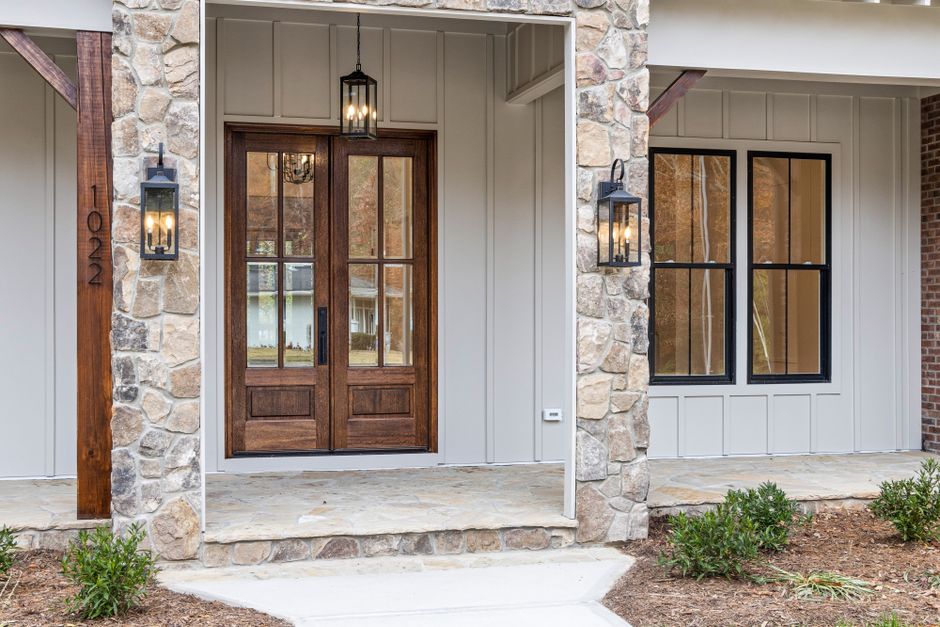
Key Takeaways
- A front door makes the biggest first impression on a home’s exterior, so its style, color, glass, and hardware all need to coordinate with the siding and trim.
- Matching door style to home architecture matters: classic paneled doors suit traditional facades, while clean-lined or steel-and-glass designs fit modern homes, and Dutch doors work well on cottage, farmhouse, or Colonial-style houses.
- Fiberglass doors with a foam core resist warping, denting, and rust and may go 15 to 20 years in a sheltered spot without a touch-up, while wood doors generally need repainting every 2 to 4 years depending on finish and exposure.
- Homeowners planning a front-door project should know what to expect regarding permits, timeline, and locking in design decisions before work begins – the experts at Banner Construction share those details in full
A front door does more than open and close. It sets the tone for a home’s entire exterior before anyone even gets close enough to knock, and a tired, mismatched, or weathered entry can drag down even a well-kept facade.
For homeowners thinking about a refresh, a front-door update is one of the simplest ways to shift a home’s curb appeal from forgettable to showcase-worthy.
Why Your Front Door Is Curb Appeal’s Focal Point
Think about the last time a house caught attention while driving down a street. Chances are, the eye went straight to the entry before noticing the siding, windows, or landscaping around it. The front door sits at the visual center of most home facades, which means its color, shape, and condition carry outsized weight in how the whole exterior reads.
A door that clashes with the rest of the home, whether in style, color, or material, creates a jarring note even when everything else is in good shape. On the flip side, a well-chosen door ties the whole exterior together and gives visitors a sense of the care put into the home. Upgrading a front door is one of several ways to boost curb appeal, alongside siding replacement and window upgrades, because the entry is where small design choices tend to have the biggest visual payoff.
Getting the most out of a door upgrade means looking at it as part of a bigger picture rather than a standalone purchase. Style, color, glass, hardware, and material all need to work together, and each choice should also account for how exposed the entry is to the weather. The sections below break down each of those decisions one at a time.
Match Door Style to Your Home’s Architecture
A front door should feel like it belongs to the house it’s attached to. A style that works beautifully on one home can look out of place on another simply because the architecture calls for something different.
Classic Panels, Modern Lines, or a Dutch Door
Traditional facades, including Colonial, Craftsman, and Tudor-style homes, tend to pair well with classic paneled doors featuring raised or recessed rectangles arranged in symmetrical patterns. Modern and contemporary homes generally look better with solid-panel designs or steel-and-glass combinations that favor clean, simple lines over ornamentation. Dutch doors, which split into separate top and bottom halves that open independently, bring a distinct charm to cottage, farmhouse, coastal, and Colonial-style homes. A Dutch door also provides a practical bonus: the top half can stay open for airflow and a quick chat with a neighbor while the bottom half stays shut.
When Historic Homes Call for Restoration Over Replacement
Homes with historic or architectural significance deserve a different approach. Introducing a brand-new style that conflicts with a century-old facade can work against the very character that makes the home special. In these cases, restoring the original door or replicating its design is usually the better path, preserving the home’s story while still delivering a refreshed, functional entry.
Choose a Color That Suits the Exterior Palette
Color is where a front door either blends into the home’s exterior or becomes its signature feature. Either approach can work, but the decision should always be weighed against the siding, trim, and landscaping already in place.
Neutral Blends vs. Bold Contrast
A neutral door color, think soft gray, warm white, or muted taupe, tends to work across a wider range of exterior palettes and ages gracefully alongside changing landscaping or trim colors over the years. A bold, contrasting color, on the other hand, makes the entry the star of the show and can give a home real personality. Whichever direction feels right, the color should be checked against:
- The siding and trim colors already on the house
- Shutters, if the home has them
- Hardscaping, such as walkways, steps, and retaining walls
- Landscaping, including evergreen shrubs and seasonal plantings
- Existing hardware finishes, like the door handle and any light fixtures nearby
Testing Paint and Finish in Natural Light
A color that looks perfect on a paint chip inside a hardware store can shift entirely once it’s on an actual front door facing the street. Testing a sample directly on the door, or on a board held up next to it, and checking how it looks in morning light, midday sun, and evening shade helps avoid an unwelcome surprise. Finish matters just as much as color. A semigloss finish resists dirt, cleans easily, and holds up well against daily wear, while a high-gloss finish shows off architectural detail on paneled doors and makes scratches and small blemishes more noticeable. Exterior-grade paint paired with the right primer for the door’s material, whether wood, fiberglass, or steel, gives the finish the best shot at standing up to sun, rain, and temperature swings.
Pick a Material Suited to Your Entry’s Exposure
Style and color get most of the attention, but material determines how well a new front door will actually hold up over the years. The right choice depends heavily on how much sun, rain, and foot traffic the entry sees.
Fiberglass, Steel, or Wood: Trade-Offs to Weigh
Each material brings its own strengths and trade-offs:
- Fiberglass doors built with a polyurethane foam core insulate well and resist warping, denting, and rust, making them a strong fit for entries that take a direct hit from sun and weather. In a reasonably protected spot, a fiberglass door may go 15 to 20 years before it needs a paint or stain touch-up.
- Steel doors with a foam core also insulate effectively and tend to cost less, making them a sensible option for a budget-conscious project or a sheltered entry that doesn’t see much weather exposure. The trade-off is that steel can dent under heavy use, and those dents can be difficult and costly to repair.
- Wood doors offer a substantial look and a distinctive character that fiberglass and steel can only imitate, but they ask for more upkeep. Wood generally needs to be repainted every 2 to 4 years, depending on finish and exposure, to prevent splitting and warping over time.
Weatherstripping, Sweeps, and Thermal Performance
Material is only part of the thermal equation. A foam-filled door resists heat flow far better than a hollow-core or solid-wood door, but the weatherstripping, door sweep, and glass all play a role too. Compression weatherstripping seals tightly against the door frame once the door is latched, a sweep blocks drafts and moisture at the bottom gap, and an adjustable threshold can be fine-tuned over time as a house settles and shifts. Together, these details can make the difference between an entry that feels drafty in winter and one that stays comfortable year-round.
Planning the Project: Permits, Timeline, and Design Lock-In
Before any tools come out, it helps to understand what the project will actually involve from start to finish. Checking with the local municipality is the right first step, since whether a permit is required depends on the specific scope of the project and the rules in that area.
Timelines for exterior remodeling projects, including door upgrades, vary quite a bit depending on the scope of the work, ranging from a few weeks to a few months on average. A single door swap moves much faster than a project paired with broader siding or window work. Whatever the scope, finalizing design decisions, door style, color, glass, and hardware, before construction begins helps avoid delays and unplanned costs that tend to crop up when choices change mid-project.
Choosing a Contractor for the Job
A front door might seem like a small project compared to a full siding replacement, but it still deserves the same careful vetting. Comparing quotes from more than one contractor gives a clearer sense of fair pricing and what’s actually included in the work.
Beyond price, a few other checks matter just as much:
- Reviews from past customers, which offer a window into how a contractor handles communication and follow-through
- Proper licensing and insurance, which protects the homeowner if something goes wrong during installation
- A portfolio of completed projects, ideally ones similar in scope to the planned door upgrade
A Well-Matched Door Transforms Your Entry
A front door upgrade succeeds when every piece, style, color, glass, material, and hardware harmonizes with the rest of the home’s exterior rather than standing apart from it. The payoff is an entry that feels intentional, welcoming, and built to last through whatever the weather brings next.
For homeowners ready to turn these ideas into an actual plan, Banner Construction has more resources explaining why working with an exterior remodeling contractor experienced in such upgrades can help turn a good idea into a well-executed result.
Banner Construction
1177 N Price Rd, St. Louis, MO, 63132
St. Louis
Missouri
63132
United States