
Umbrella Labs Introduces Research Use Only SLU PP 332 Program To Support High Rigor Metabolic, Mitochondrial, And Nuclear Receptor Bench Science
TUCSON, AZ / ACCESS Newswire / December 29, 2025 / Umbrella Labs today announced the availability of SLU PP 332 as a research use only chemical probe supported by a documentation first workflow built for laboratories that need traceable materials, consistent handling guidance, and assay aware characterization. Product access for SLU PP 332 in the Umbrella Labs catalog is available here: https://umbrellalabs.is/shop/research-chemicals/research-chemical-capsules/slu-pp-332-powder/
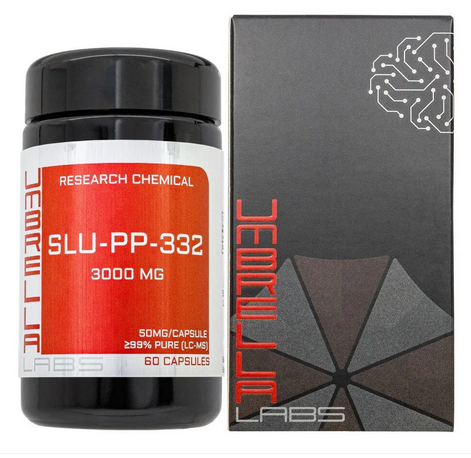
SLU PP 332 has been described in peer reviewed scientific literature as a synthetic pan agonist of estrogen related receptors, commonly abbreviated as ERRa, ERRß, and ERR?, with reported activity profiles that make it useful for interrogating oxidative metabolism programs, mitochondrial capacity signaling, and transcriptional control of energy handling in experimental systems. As a pathway focused tool compound, SLU PP 332 is commonly discussed as enabling mechanistic studies that connect receptor level activation to downstream functional readouts such as metabolic flux proxies, pathway specific transcriptional signatures, and mitochondrial function markers. Umbrella Labs is positioning this program around a methods framework intended to help investigators reduce avoidable variability across preparation, storage, and assay selection so results remain interpretable and comparable across projects.
The Umbrella Labs SLU PP 332 program is structured around a practical question that research groups repeatedly face: how to select and use a pathway probe with enough confidence that observed biology is not simply an artifact of preparation, stability drift, or assay interference. Instead of treating documentation as a single file attached to a lot number, the program is built to provide batch level characterization combined with workflow guidance that reflects how bench teams actually operate across repeated experiments. The objective is to support higher quality study planning, clearer reporting, and improved reproducibility for laboratories working in metabolism, mitochondrial biology, and nuclear receptor research.
"Labs running metabolism and receptor biology experiments need more than a label and a purity statement, they need a clear picture of how a compound behaves across the full workflow from storage and preparation to assay readout," said Samuel Yanner, Director of Scientific Operations at Umbrella Labs. "With SLU PP 332 we are focusing on reproducible characterization that supports ERR pathway experiments, including identity confirmation, stability behavior under realistic handling patterns, and practical guidance to reduce ambiguity when interpreting activation signals."
Research context and why ERR pathway probes matter to bench science
Estrogen related receptors are transcription factors that regulate broad gene networks tied to mitochondrial function, oxidative capacity, and substrate utilization, which makes them a frequent focus in studies of cellular energy handling and adaptation responses in experimental systems. When receptor programs are activated, downstream readouts can include changes in expression panels associated with oxidative phosphorylation, shifts in mitochondrial content markers, altered enzymatic capacity proxies, and changes in pathway level respiration signatures depending on model and assay conditions. A major challenge for laboratories studying these pathways is distinguishing true pathway engagement from effects created by concentration drift, inconsistent preparation, or assay formats that can produce misleading readouts when compounds interact with reporters, dyes, membranes, or plate materials. Umbrella Labs is designing the SLU PP 332 program to address these practical issues through transparent, assay minded documentation.
Program philosophy, documentation first rather than product first
The SLU PP 332 program follows a documentation first approach that treats batch level characterization and methods guidance as core deliverables rather than optional add ons. Each batch is intended to be supported by identity confirmation and chromatographic profiling, along with clear reporting of method conditions and acceptance thresholds so data can be interpreted consistently across instruments and operators. Where appropriate, the program also emphasizes orthogonal confirmation principles, meaning that confidence should come from more than one analytical perspective rather than relying on a single measurement to stand in for identity and suitability. This approach is designed to support research groups operating under internal quality systems, audit minded workflows, or multi operator environments where reproducibility depends on clear documentation.
Assay aware characterization designed for ERR activation workflows
Because SLU PP 332 is used as a pathway probe, characterization is framed around the types of assays commonly used to study ERR programs rather than generic metrics alone. These assay types can include receptor reporter systems, target gene expression panels, binding or engagement proxies, and functional metabolic readouts that attempt to connect pathway activation to mitochondrial capacity and oxidative signatures. The goal is not to prescribe one protocol, but to provide decision support that helps investigators choose controls and reporting details that reduce ambiguity across different readout families. Practical topics include how to document working solution preparation, how to track concentration assumptions across dilutions, and how to align solvent choices with assay matrices to reduce unintended interference.
Stability mapping and handling guidance built for real lab conditions
Small differences in handling can cause large differences in delivered exposure, especially when working concentrations are low or when experiments span many days across multiple runs. The SLU PP 332 program is designed to provide stability and handling guidance oriented around realistic bench patterns such as repeated sampling, short benchtop windows, temperature excursions during transfers, and storage practices across common laboratory environments. The program aims to help laboratories reduce run to run drift by clarifying storage conditions, supporting rational working solution planning, and documenting assumptions that can otherwise remain implicit and lead to inconsistent outcomes. This stability mapping focus is intended to support projects that extend across weeks or months, where subtle preparation changes can become hidden variables.
Traceability that supports multi operator and multi site reproducibility
Reproducibility problems often appear when projects change hands between operators or move between instruments and locations, and those problems are frequently driven by workflow differences rather than changes in the underlying study design. The SLU PP 332 program is structured to support traceability, including batch identifiers, documentation consistency, and clear statements of analytical conditions so collaborating teams can align on comparable assumptions. The objective is to make it easier for labs to interpret differences as biological rather than procedural, and to help teams maintain a stable baseline across longer research timelines. This approach is particularly relevant for pathway probes that are used across diverse models and readouts, where consistency in preparation and documentation becomes central to interpretability.
Method briefs designed to be reusable in research planning and reporting
Umbrella Labs intends to present program outputs in a format that can be reused by laboratory teams in study planning and internal documentation. This includes structured briefs that emphasize what was measured, under what conditions, and what acceptance criteria were used for batch release, while separating measured observations from hypotheses or open questions that require additional experimentation. The intent is to support more consistent reporting practices and to give researchers a stable reference when summarizing reagent provenance and characterization in internal records. A methods brief format also supports continuity when the same compound is used across multiple projects, enabling labs to reduce repeated guesswork and improve consistency in how data is generated and interpreted.
Scope and research use only restrictions
All SLU PP 332 materials and associated documentation supplied by Umbrella Labs are provided strictly for laboratory research and analytical workflows. They are not intended for diagnostic or therapeutic applications, and they should be handled only by qualified personnel in appropriately equipped laboratory environments using established institutional procedures for chemicals and laboratory reagents. Umbrella Labs is presenting this program as a support layer for rigorous bench science, centered on transparent documentation and method aware characterization, so that investigators can reduce avoidable variability and focus on reproducible pathway questions.
About Umbrella Labs
Umbrella Labs is a U.S. based supplier of research grade peptides, SARMs, and biochemical reagents focused on supporting rigorous, transparent, research use only applications in academic and private laboratories. Through third party analytical testing, controlled sourcing, and batch documentation, the company provides materials whose identity and quality attributes are backed by accessible records intended to support traceable workflows and reproducible bench science.
Contact
Umbrella Labs
3280 E Hemisphere Loop
Tucson, AZ 85706
[email protected]
1-866-289-7276
SOURCE: Umbrella Labs
Information contained on this page is provided by an independent third-party content provider. XPRMedia and this Site make no warranties or representations in connection therewith. If you are affiliated with this page and would like it removed please contact [email protected]
