
Photonic Computing System Sets a New Benchmark for AI Computing Power and Energy Efficiency
SOURCE LightStandard
Lightstandard Showcases Breakthrough Photonic Computing Technology at the Saudi Industrial Transformation Expo
RIYADH, Saudi Arabia, Dec. 2, 2025 /PRNewswire/ -- On December 1, 2025, at the Saudi Industrial Transformation Expo held at the Riyadh International Exhibition Center in Saudi Arabia, an photonic-electronic fusion computing system developed by Lightstandard captured widespread international attention as it simultaneously overcame two major bottlenecks facing the global AI industry: compute shortage and energy deficit.
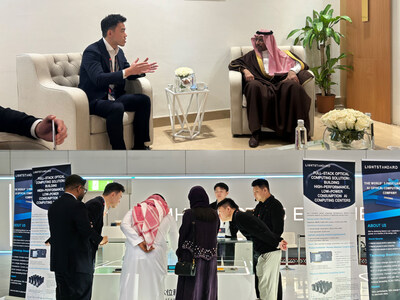
Previously, AI computing systems based on electronic chips continuously pushed computational limits through advanced process nodes and other means. However, because of high power requirements, many large companies in energy-constrained countries found themselves unable to deploy the vast quantities of computing cards they had procured. The prophecy that "Moore's Law for electronics is approaching its limits" has also deeply concerned AI practitioners. Lightstandard, a Chinese tech company, offers a disruptive photonic computing solution to resolve both their challenges and concerns.
Founded in 2022, Lightstandard is the world's only photonic computing system company to be recognized on the World Economic Forum's "Technology Pioneers" list at Summer Davos. In 2024, the company achieved the world's highest compute density and precision in photonic computing chips. They've established an "Photonic Moore's Law," enabling exponential scaling of AI computational power with minimal energy overhead.
According to Lightstandard founder Harry, speaking at the Saudi Industrial Transformation Expo, the company employs an innovative compute-in-memory photonic matrix architecture in its photonic computing chips, requiring only a single electrical drive to complete an AI computing task with zero static power consumption. Photonic-electronic fusion computing systems based on these photonic chips dramatically reduce the construction costs of AI computing centers and data facilities. In a 10,000-card cluster, the annual power consumption of photonic-electronic fusion systems (converted to standard coal equivalent) is approximately 1% of that of conventional electronic computing systems. Once deployed at scale for AI computing and data-center infrastructure, measures such as building additional power plants in remote desert regions may no longer be necessary.
 View original content to download multimedia:https://www.prnewswire.com/news-releases/photonic-computing-system-sets-a-new-benchmark-for-ai-computing-power-and-energy-efficiency-302629756.html

©PR Newswire. All Rights Reserved.
Information contained on this page is provided by an independent third-party content provider. XPRMedia and this Site make no warranties or representations in connection therewith. If you are affiliated with this page and would like it removed please contact [email protected]
